How to Balance Your Chakras: Simple Techniques
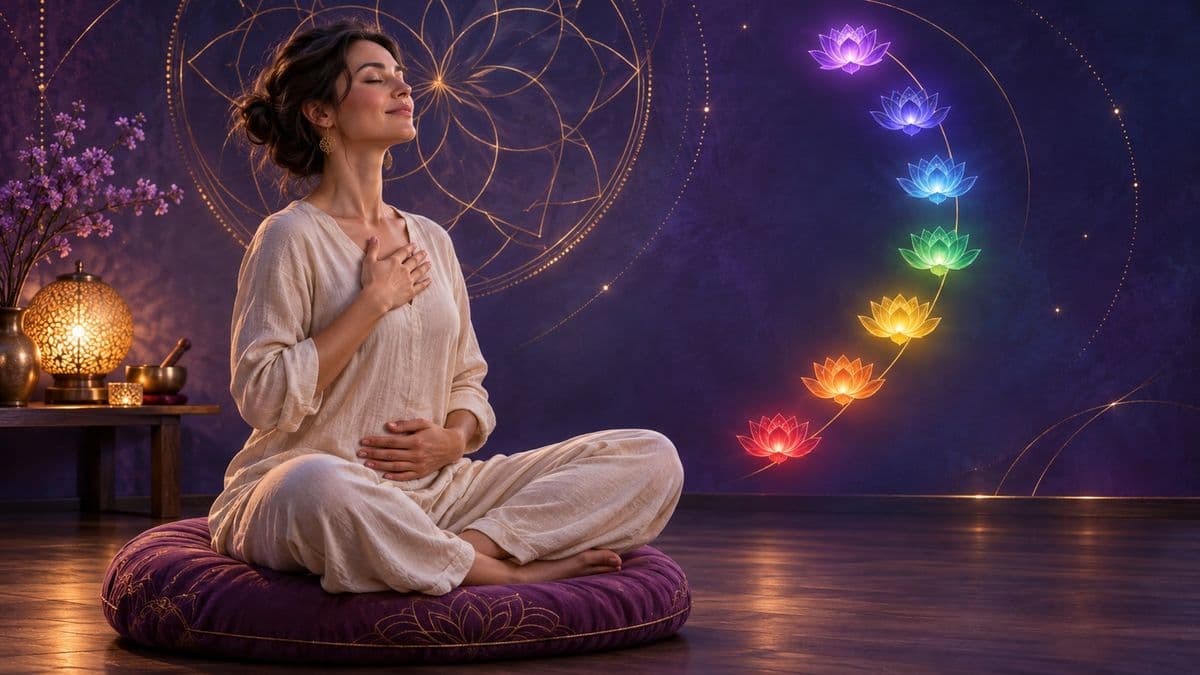
Meditation is one of the most effective practices for balancing the chakras. You can focus on one specific chakra or use a practice that works with the entire chakra system.
1. Meditation for Chakra Balancing
Meditation is one of the most effective practices for balancing the chakras. You can focus on one specific chakra or use a practice that works with the entire chakra system.
• Sit comfortably, close your eyes, and bring your attention to your breathing.
• Visualize light in the color associated with the chakra spreading through that area, such as red for the Root Chakra or orange for the Sacral Chakra.
• Breathe slowly and imagine energy flowing freely through your body.
2. Yoga Poses for the Chakras
Certain yoga poses are traditionally associated with activating and balancing specific chakras:
• Root Chakra: Tree Pose (Vrikshasana).
• Sacral Chakra: Butterfly Pose (Baddha Konasana).
• Solar Plexus Chakra: Warrior Pose (Virabhadrasana).
• Heart Chakra: Camel Pose (Ustrasana).
• Throat Chakra: Cobra Pose (Bhujangasana).
• Third Eye Chakra: Child’s Pose (Balasana).
• Crown Chakra: Lotus Pose (Padmasana).
Move slowly, breathe consciously, and focus your attention on the qualities traditionally connected with each energy center.
3. Sounds and Mantras
In yogic traditions, each chakra is associated with a specific seed sound or mantra. Repeating these sounds can become part of a meditation or chakra-balancing practice:
• Root Chakra: “LAM”
• Sacral Chakra: “VAM”
• Solar Plexus Chakra: “RAM”
• Heart Chakra: “YAM”
• Throat Chakra: “HAM”
• Third Eye Chakra: “OM”
• Crown Chakra: Silence
Rather than focusing on perfect pronunciation, allow the vibration of the sound to become part of your awareness.
4. Crystals and Aromatherapy
Crystals and essential oils are also commonly used in spiritual chakra practices. They can help create a ritual, support concentration, and strengthen the symbolic connection with a particular chakra.
For example:
• Root Chakra: Red jasper and sandalwood essential oil.
• Heart Chakra: Rose quartz and rose essential oil.
• Third Eye Chakra: Lapis lazuli and lavender essential oil.
These practices are best understood as supportive elements of meditation and spiritual self-care rather than medical treatments.
5. Conscious Breathing
Breathing practices such as Nadi Shodhana, or alternate nostril breathing, can be used to create a sense of calm and energetic balance.
Sit comfortably and allow your breathing to slow. As you alternate between the nostrils, keep your attention on the sensation of the breath and imagine the energy within your body becoming more balanced and harmonious.
How Do You Know If Your Chakras Are Balanced?
In chakra traditions, balance is associated with a greater sense of inner harmony. You may notice that you feel more emotionally centered, more present, and more connected with yourself and the world around you.
Balanced chakras are traditionally associated with:
• A greater sense of inner peace and emotional stability.
• More energy, focus, and mental clarity.
• A stronger feeling of connection with yourself, others, and the universe.
Periods of stress, emotional tension, or feeling disconnected do not automatically mean that a chakra is blocked. Instead, chakra work can be used as a framework for exploring which area of your inner life may need more attention.
Start With One Chakra
You do not need to balance all seven chakras at once. Begin by noticing which themes feel most relevant in your life right now.
If you feel insecure or ungrounded, start with the Root Chakra. If self-expression feels difficult, explore the Throat Chakra. If you are seeking greater compassion and emotional openness, bring your attention to the Heart Chakra.
Choose one practice and stay with it for several days. Meditation, yoga, mantra, conscious breathing, or a simple visualization can become a daily ritual.
Chakra balancing is not about achieving a perfect energetic state. It is about becoming more aware of yourself and creating space for greater harmony between body, emotions, mind, and spiritual awareness.
Begin with one chakra, one breath, and one conscious moment.
Then notice what begins to shift.