Astral Projection: Myth or Reality?
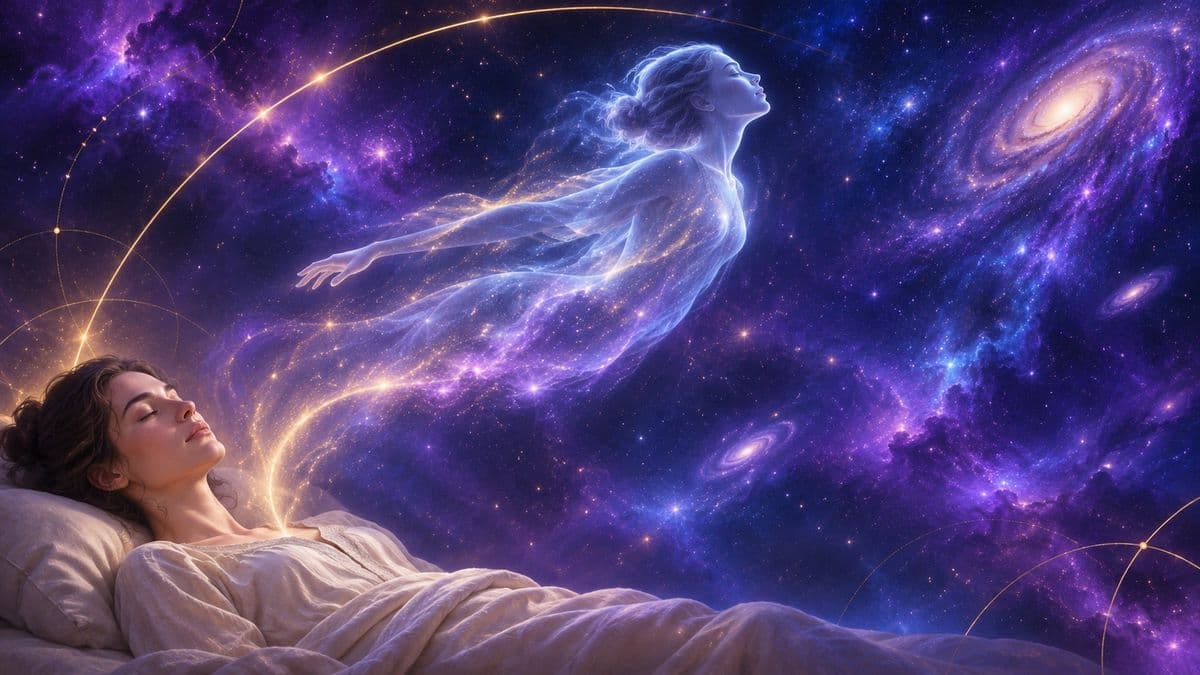
Have you ever woken from a dream with the feeling that you had been somewhere far away, somewhere impossible to explain?
Have you ever woken from a dream with the feeling that you had been somewhere far away, somewhere impossible to explain? Perhaps you have heard stories from people who claim they have “left” their bodies and explored other dimensions. This phenomenon, known as astral projection, has fascinated mystics, spiritual seekers, and researchers for centuries.
But is astral projection real, or is it an illusion created by the mind? This article explores its origins, spiritual interpretations, scientific explanations, and practical techniques while asking a central question: Can consciousness truly separate from the physical body and travel beyond ordinary reality?
What Is Astral Projection?
Astral projection, often associated with an out-of-body experience or OBE, describes the sensation that consciousness has separated from the physical body. In spiritual traditions, this experience is often explained through the idea of an “astral body”, a subtle or energetic version of the self.
According to this view, the astral self may be able to move beyond the physical body, explore non-physical realms, or encounter other forms of consciousness.
What Does an Astral Projection Feel Like?
People who report astral projection often describe similar sensations, including:
• A feeling of floating above the physical body.
• Seeing the body from an external perspective.
• Moving through tunnels of light or unfamiliar environments.
• Encountering spiritual guides or other beings.
• A strong sense of expanded awareness or separation from ordinary physical reality.
The experience can feel extremely vivid, which is one reason why many people interpret it as something more than a dream.
The History and Spiritual Roots of Astral Projection
Astral projection is not a modern concept. Ideas about consciousness existing beyond the physical body appear in many spiritual and philosophical traditions.
Ancient Egypt
Ancient Egyptian beliefs included concepts such as the Ka, a spiritual aspect of the person that could exist beyond the physical body and continue after death.
Indian Spiritual Traditions
Indian philosophy describes different levels of human existence, including subtle aspects of the body and consciousness. Yogic and esoteric traditions sometimes associate deep meditation, dreams, and altered states of awareness with experiences beyond ordinary physical perception.
Shamanic Traditions
In various shamanic traditions, rituals involving drumming, chanting, movement, or other practices are used to enter altered states of consciousness and undertake symbolic or spiritual journeys.
Western Esotericism
During the nineteenth and twentieth centuries, astral travel became an important subject within occult and Theosophical traditions, where the astral body was described as capable of moving independently of the physical body.
Science and Spirituality: Is Astral Projection Real?
Science recognizes out-of-body experiences as real subjective experiences, but there is currently no established scientific evidence that consciousness literally leaves the body and travels through other dimensions.
This creates an interesting divide between neurological explanations and spiritual interpretations.
The Scientific Perspective
Researchers have connected out-of-body experiences with brain processes involved in body awareness and spatial orientation, particularly regions around the temporoparietal junction.
Astral projection experiences are also often compared with lucid dreaming, sleep paralysis, and hypnagogia, the transitional state between wakefulness and sleep.
From this perspective, a person can experience an extremely convincing sense of leaving the body while the experience itself is generated within consciousness and the brain.
The Spiritual Perspective
Spiritual practitioners often interpret astral projection differently. They may understand it as evidence that consciousness is not limited to the physical body.
Personal accounts frequently describe encounters with unfamiliar places, spiritual beings, or information that seemed meaningful to the person experiencing them.
These reports can be powerful and transformative, but personal experience alone cannot establish objectively that consciousness has travelled outside the body. The experience and its interpretation remain two different questions.
How Can You Explore Astral Projection?
Astral projection practices generally begin with deep physical relaxation while trying to maintain conscious awareness.
1. Prepare the Body and Mind
Choose a quiet place where you are unlikely to be disturbed. Lie down comfortably and allow the body to relax.
Begin with slow breathing or a short meditation. The aim is to let physical tension decrease while keeping your attention awake.
2. Use Visualization
One common method is the floating technique. Imagine that your body is becoming lighter and gently rising away from the surface beneath you.
Another traditional practice involves visualizing a silver cord connecting the physical body with the imagined astral body. In esoteric traditions, this symbolizes the continuing connection between physical and non-physical awareness.
3. Notice Vibrations Without Forcing Them
Some people report sensations of vibration, buzzing, pressure, or movement before an out-of-body experience.
If these sensations occur, observe them calmly rather than trying to intensify them. Similar sensations can also occur during the transition into sleep or sleep paralysis.
4. Practice Lucid Dreaming
Lucid dreaming can be another way to explore altered states of consciousness. In a lucid dream, you become aware that you are dreaming while the dream continues.
Some practitioners use this awareness as a starting point for experiences they interpret as astral projection.