Scientific Research on the Power of Prayer
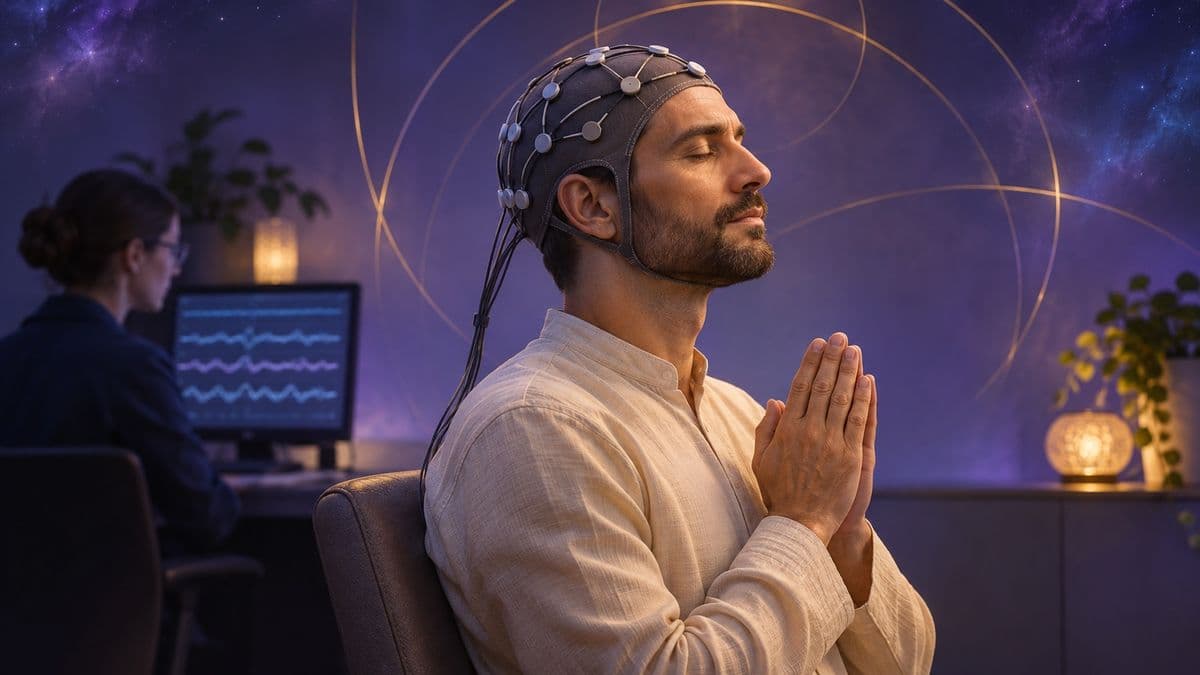
Although prayer is primarily understood as a spiritual or religious practice, researchers have also explored how prayer, meditation, gratitude, and other contemplative practices may influence psychological and physical well-being.
Although prayer is primarily understood as a spiritual or religious practice, researchers have also explored how prayer, meditation, gratitude, and other contemplative practices may influence psychological and physical well-being.
The scientific picture is more nuanced than the idea that prayer directly changes external reality. What research can explore more reliably is how prayer affects attention, emotional regulation, stress, hope, social connection, and the way people cope with difficult experiences.
1. Prayer and Stress Reduction
Prayer can create a moment of stillness in which attention moves away from constant worry and toward reflection, trust, gratitude, or hope.
Slow breathing and contemplative prayer may support relaxation and help the body move away from a state of constant alertness. For many people, the familiar rhythm of prayer also creates a feeling of safety and emotional stability.
The effect is not necessarily found in the words alone. It can come from the combination of focused attention, breathing, repetition, meaning, and the feeling of connection with something greater than oneself.
2. Prayer, Health, and Well-Being
Some research has found associations between religious or spiritual practices and aspects of well-being, but the relationship is complex.
People who regularly pray, meditate, or participate in spiritual communities may experience benefits connected with emotional support, healthier coping strategies, a greater sense of meaning, and stronger social relationships.
Prayer should not be considered a replacement for medical or psychological treatment. Its value lies primarily in the emotional, spiritual, and psychological support it can offer alongside appropriate professional care.
3. The Power of Intention
One of the most interesting aspects of prayer is intention.
When we formulate a clear intention, we direct attention toward what matters to us. This can influence what we notice, how we make decisions, and how consistently we act toward a particular goal.
The placebo effect also demonstrates that expectations and beliefs can influence certain subjective experiences and physiological responses. This does not mean that believing something automatically makes every desired outcome happen. It shows that the relationship between mind and body is more powerful and complex than it may first appear.
Prayer can work in a similar psychological space by bringing belief, expectation, emotion, and focused attention together.
4. Prayer, Quantum Physics, and the Idea of Energy
Spiritual discussions sometimes connect prayer and intention with quantum physics.
Quantum physics does reveal a reality that behaves very differently from the world of everyday experience. However, current science does not demonstrate that human thoughts or prayers can use quantum processes to directly reshape external events.
The idea of prayer as “energy” is therefore better understood as a spiritual metaphor rather than an established scientific mechanism.
That does not make the experience meaningless.
Prayer can still profoundly change the person who is praying, influencing attention, emotional state, perspective, and subsequent actions. And changing the way we think and act can, in turn, influence the reality we create around ourselves.
How Can You Practice Prayer in Everyday Life?
Prayer does not have to be formal or tied to a particular religion. It can become a simple daily practice of intention, gratitude, reflection, and connection.
1. Express Gratitude
Begin or end the day with a short prayer of gratitude.
Gratitude shifts attention toward what is already present rather than constantly focusing on what is missing.
For example:
“Thank you for this new day and for the possibilities it brings.”
You do not need to force yourself to feel grateful for everything. Simply notice one thing that genuinely matters to you.
2. Set an Intention
Before beginning the day, entering an important conversation, or making a decision, use prayer to clarify how you want to approach the situation.
For example:
“Give me clarity and strength to make the best decisions I can today.”
An intention does not control the future. It gives your attention a direction.
3. Pray During Stressful Moments
When anxiety, frustration, or uncertainty takes over, stop for a moment.
Take a slow breath and say:
“Help me find peace and clarity in this moment.”
Even a few seconds of intentional stillness can interrupt an automatic emotional reaction and create space for a more conscious response.
4. Use Guided Prayer or Meditation
If you find it difficult to formulate your own prayer, guided meditations, contemplative practices, or written prayers can provide structure.
The important part is not finding perfect words.
It is becoming present enough for the words to mean something.
5. Create a Personal Prayer Ritual
A ritual can signal to the mind that it is time to move from ordinary activity into reflection.
You might light a candle, sit in silence, write a prayer in a journal, practice conscious breathing, or simply spend a few minutes without distractions.
Over time, the ritual itself can become associated with calm, presence, and connection.
Simple Prayers for Everyday Life
A Prayer for Peace
“May peace fill my heart, my mind, and my home. May I meet every challenge with awareness, courage, and trust. Help me recognize what I can change and find peace with what I cannot control.”
A Prayer of Gratitude
“Thank you for the gift of this life, for what I am learning, and for the love and goodness I am able to recognize around me. May I continue my path with an open heart and greater awareness.”
A Prayer for Strength
“Give me the strength to face what is before me and the wisdom to recognize the next step. May love, courage, and clarity guide the way I act.”
The Power of Prayer During Difficult Times
Prayer often becomes most meaningful when certainty disappears.
During grief, illness, fear, loss, or major life transitions, people may turn to prayer not because they expect every problem to disappear, but because they need somewhere to place what feels too heavy to carry alone.
Prayer can create a moment in which fear is expressed instead of suppressed.
It can provide hope when answers are unavailable.
It can remind us that uncertainty does not have to mean complete helplessness.
Sometimes the situation changes.
Sometimes we change within the situation.
Both can matter.
Prayer, Intention, and Conscious Living
At Oasis of Life, practices such as meditation, conscious breathing, visualization, and deep relaxation can create the inner space in which intention becomes clearer.
Prayer can become part of that process.
Instead of repeating words automatically, you can use prayer as a moment of complete presence. What are you truly asking for? What are you ready to release? What do you want to bring into your life through your own choices and actions?
This is where intention becomes powerful.
Not because every thought magically transforms external reality, but because a clear intention can transform the way you meet reality.
Conclusion
Prayer is more than a religious ritual for many people. It can be a practice of trust, intention, gratitude, reflection, and connection.
Whether you direct your prayer toward God, the universe, higher consciousness, or simply the deepest part of yourself, the act itself can create a moment in which the noise becomes quieter and what truly matters becomes clearer.
Perhaps the power of prayer does not always lie in receiving exactly what we ask for.
Sometimes its power lies in what happens within us while we are asking.
One conscious intention can change a decision.
One decision can change a direction.
And sometimes a new direction begins with something as simple as a few quiet words spoken with complete sincerity.