How to Practice Yoga Nidra
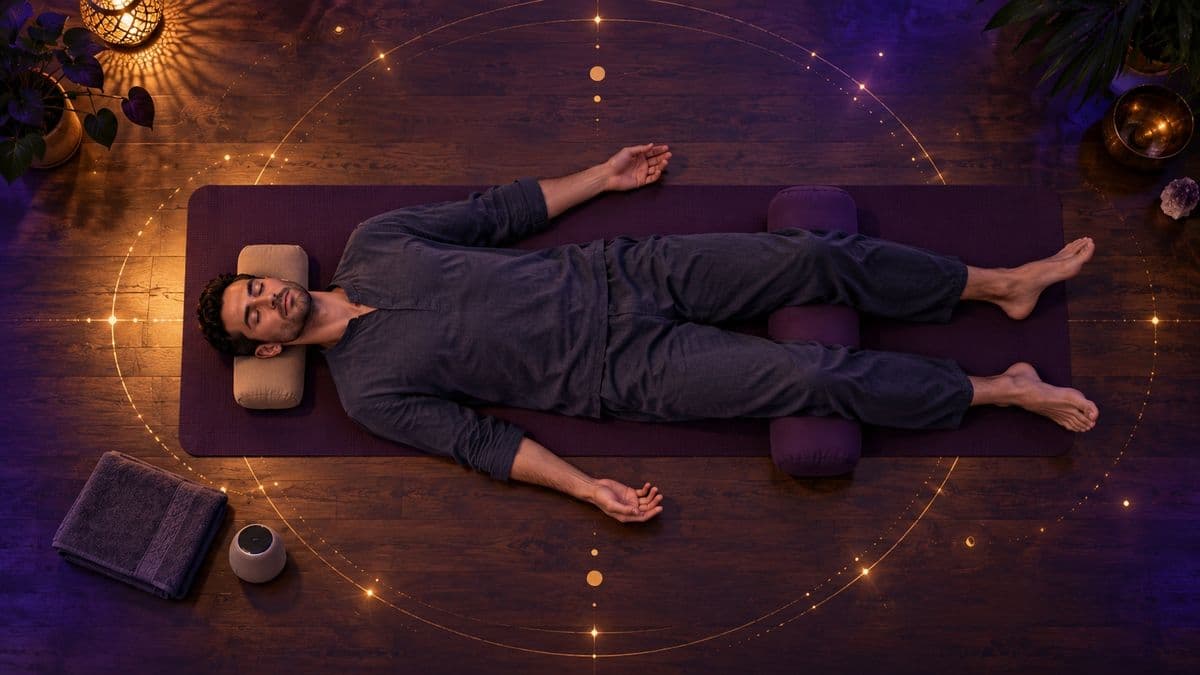
Yoga Nidra is more than a relaxation technique. It is a practice of deep conscious rest that creates space for the body to relax, the mind to become quieter, and attention to turn inward.
1. Prepare Your Space
Choose a quiet place: Find a room where you are unlikely to be disturbed and lie down on a soft, comfortable surface.
Create a calming atmosphere: Dim the lights, light a candle, or use a scent that helps you relax.
Wear comfortable clothing: Choose loose clothing and lie on your back in Savasana, or Corpse Pose. You can place a cushion under your knees or head for additional support.
2. Follow a Guided Practice
Yoga Nidra is usually practiced with a guided meditation, either with a teacher, an audio recording, or an app such as Life Inside.
A typical Yoga Nidra session includes several stages.
Set an Intention, Sankalpa
At the beginning of the practice, choose a short positive intention or affirmation such as “I am calm and safe” or “I allow my body to rest deeply.”
Your Sankalpa should feel simple, personal, and meaningful.
Body Scan
Bring your attention gradually through different areas of the body, moving from the feet toward the head.
There is nothing you need to change. Simply notice each part of the body and allow tension to soften as your awareness moves through it.
Breath Awareness
Bring your attention to the natural rhythm of your breathing. Notice each inhale and exhale without forcing or controlling the breath.
This helps anchor attention in the present moment and allows the mind to become quieter.
Visualization
Guided imagery can deepen relaxation. You might imagine a still lake, a quiet forest, or warm light surrounding the body.
Allow the images to appear without trying to make them perfect. The goal is simply to give the mind a calm and gentle point of focus.
Return to Wakefulness
At the end of the practice, gradually bring your awareness back to your body and the room around you.
Notice your breathing, gently move your fingers and toes, and open your eyes when you feel ready. Take a moment before sitting or standing up.
3. How Long Should Yoga Nidra Last?
A Yoga Nidra session commonly lasts between 20 and 45 minutes, although shorter practices of around 10 minutes can also offer a meaningful period of rest and relaxation.
Choose a duration that fits naturally into your day. Consistency is more important than making every session long.
How Can You Integrate Yoga Nidra Into Daily Life?
In the morning: Use a short Yoga Nidra session to begin the day with greater calm, clarity, and intention.
During your lunch break: Practice Yoga Nidra as a mental reset when you feel overstimulated or tired.
Before sleep: A gentle evening practice can help you slow down and create a smoother transition from the activity of the day into rest.
Practical Tips for a Successful Practice
Practice regularly: Even a short session can become valuable when it is part of a consistent routine.
Use headphones if helpful: When listening to a guided meditation, headphones can make it easier to stay focused on the voice and reduce external distractions.
Do not aim for perfection: Your attention may wander, or you may occasionally fall asleep. Simply return to the practice when you notice. Yoga Nidra is about conscious rest, not performing the technique perfectly.
Write down your intention: After the session, you can write your Sankalpa in a journal to keep the intention present in everyday life.
Conclusion
Yoga Nidra is more than a relaxation technique. It is a practice of deep conscious rest that creates space for the body to relax, the mind to become quieter, and attention to turn inward.
In a world filled with constant stimulation, Yoga Nidra can become a personal ritual of stillness and renewal.
Try it today. Lie down, close your eyes, follow the voice guiding you through the practice, and allow yourself to do something that often feels surprisingly difficult in modern life:
rest without having to achieve anything.
After 30 minutes, you may notice that your body feels lighter, your breathing calmer, and your mind clearer.
Sometimes the deepest reset begins by doing less, not more.